

How Aflatoun is equipping school children with social and financial skills
March 6, 2024
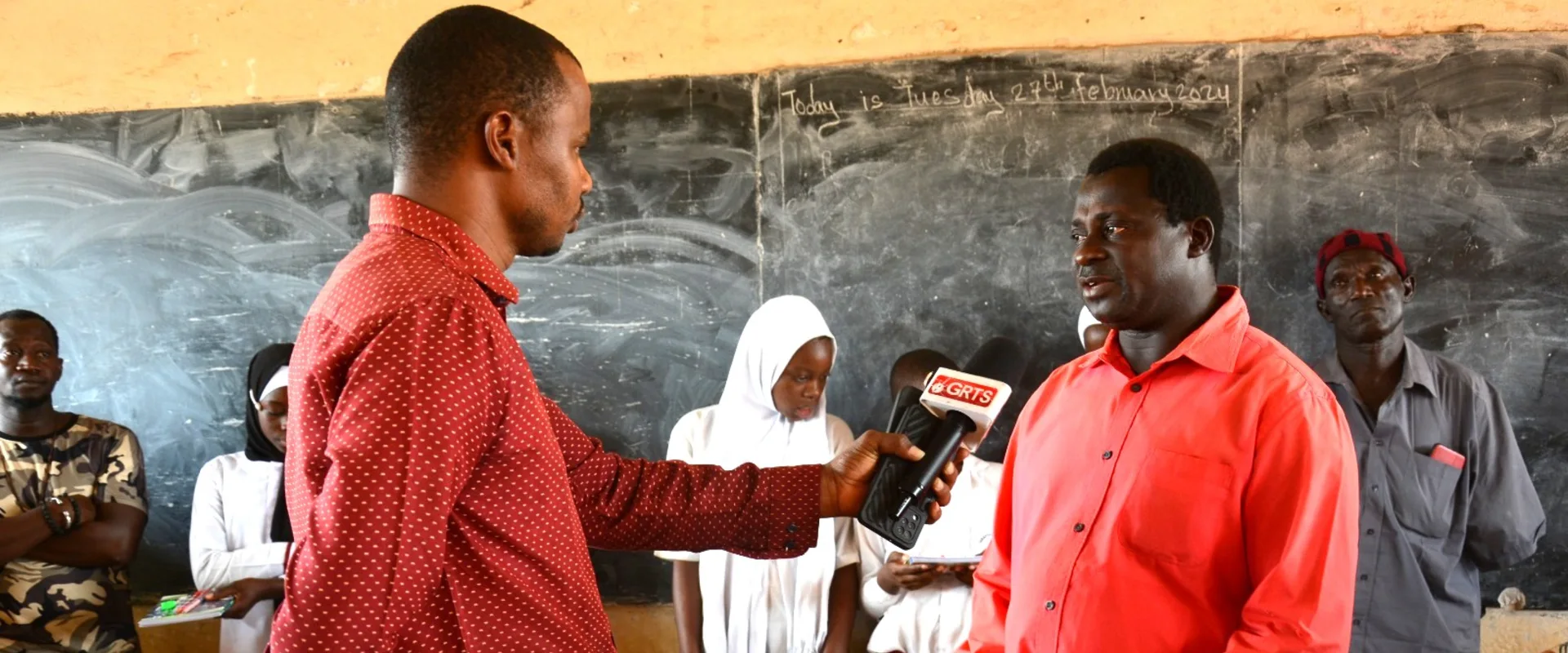
Deputy Head Teacher, Farfenni Lower Basic School
In many rural Gambian schools, poverty places basic learning materials out of reach for children, many arrive without pens, notebooks, or the modest fees required to participate. This lack of resources leads to absenteeism, drop‑outs, and lost potential.
To address this urgent need, ChildFund introduced the Aflatoun Social and Financial Education Project more than a decade ago, in partnership with Aflatoun International. The Ministry of Basic and Secondary Education has since integrated Aflatoun into the national curriculum and rolled it out across primary schools nationwide.
Since its introduction over ten years ago, ChildFund and the Ministry of Basic and Secondary Education have helped set up Aflatoun Clubs in more than 400 lower and upper basic schools across six regions of The Gambia, reaching over 20,000 students annually.
At Mauritani Farafenni Lower Basic School, Deputy Head Teacher Ousman Camara highlights the project’s impact: “Aflatoun is one of the most important initiatives in our school. It supports students who face financial barriers to education and has noticeably improved both their wellbeing and academic performance,” he says. “We now sell books and other learning materials on-site so students don’t have to leave class to buy supplies in town. For those who can’t afford them, the Aflatoun Club provides these materials free of charge.”
Through Aflatoun, children learn essential social skills, understanding their rights and responsibilities, patience, sharing, decision‑making, and goal‑setting, alongside financial literacy topics like saving, spending, and entrepreneurship.
In Kiang, Mother’s Club member Aminata Darboe reports: “Aflatoun has been a lifeline for children whose parents cannot buy school materials. They receive everything they need at no cost.”
She adds, “We trained on soap production and then taught the students. They now make and sell soap locally, using the profits to support their education.”
At Kiang Dumbutou Lower Basic School, project coordinator Maimuna Colley observes: “Before Aflatoun, needy students struggled to obtain basic materials. Now the program has brought both financial gain and positive behavior change to our school.”
In Massembeh, Head Teacher Alieu Gaye notes Aflatoun’s role in preventing drop‑outs: “In rural areas, poverty used to force students to share notebooks across subjects. Today, any Aflatoun Club member can request the supplies they need—free of charge.”
Teacher coordinator Amadou S. Jallow explains how clubs sustain themselves: “We invest heavily in printing T‑shirts for students and teachers using Aflatoun funds. Sales from these shirts help us sponsor the most vulnerable students.”
He adds, “Before Aflatoun, some pupils had to write two subjects in a single notebook because their families couldn’t afford more books. Now, any member of the Aflatoun Club can receive the necessary materials free of charge.”
“I see my daughter come home excited about goal‑setting and saving,” shares Mariama Jatta, a mother in Massembeh. “She runs her own mini‑soap business with classmates and uses the money to help buy her books.”
“Schools with active Aflatoun Clubs report a 15 percent increase in regular attendance, and participating schools have seen a 30 percent drop in drop‑out rates among the most vulnerable students,” says Nfamar Dabo, ChildFund’s Programs and Sponsorship Director. “These metrics underscore that when children gain life skills and financial literacy, they stay in school and build a foundation to break the cycle of poverty.”
SHARE:


Related Resources
“The whip is no longer my first response”: a quiet parenting shift across rural Gambia
Across many rural communities in The Gambia, harsh discipline has long been seen as the...

Fathers and boys’ clubs challenge Gambia’s unspoken marital struggles
In The Gambia and across much of the sub-region, men are often raised to endure...

How a donkey cart transformed school access, boosted enrolment in rural Central River North
In the rural village of Lower Nuimi District in the North Bank Region, Mariama, a...