

“The whip is no longer my first response”: a quiet parenting shift across rural Gambia
July 3, 2026
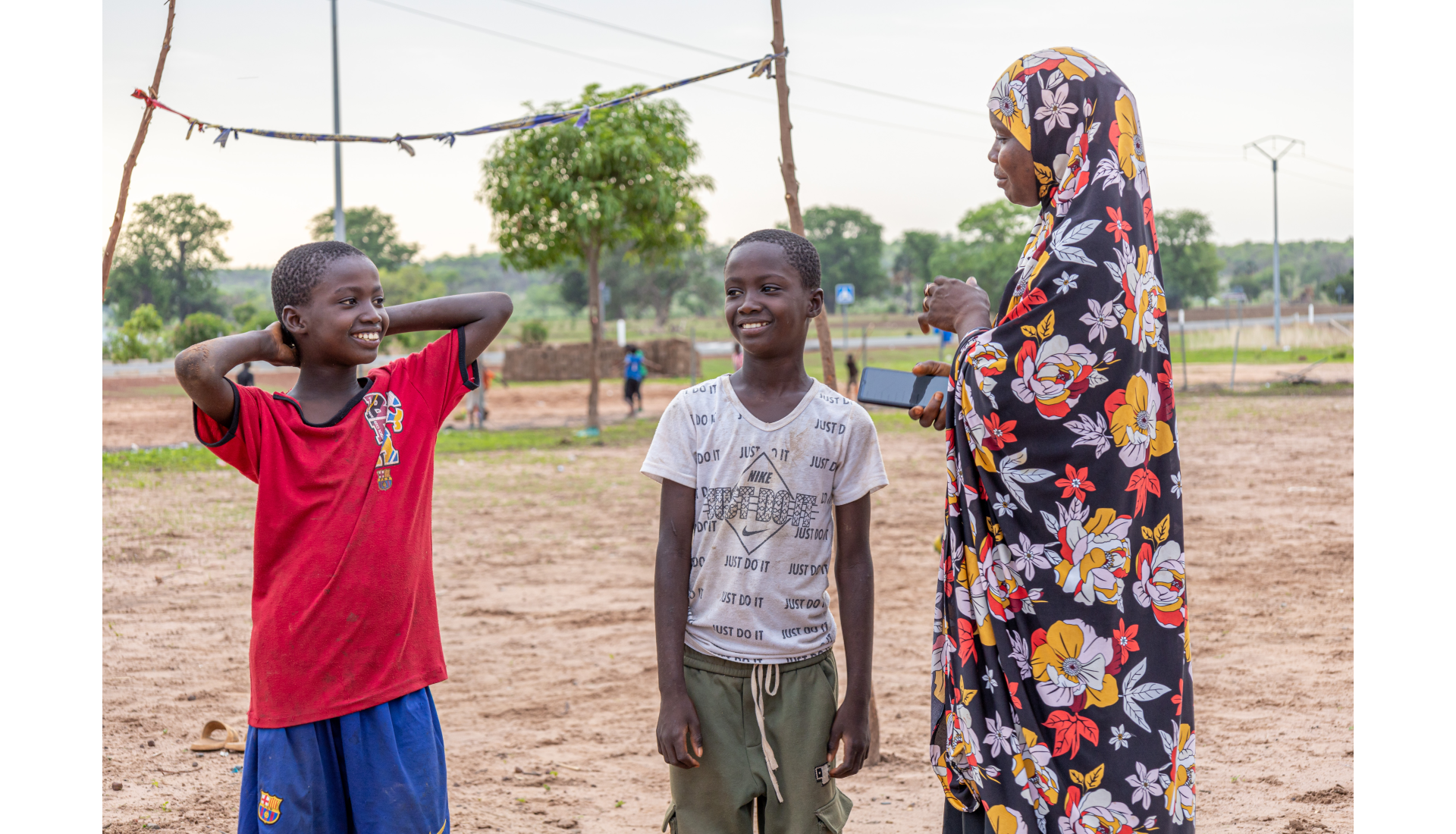
Maimuna interacting with her twins.
Across many rural communities in The Gambia, harsh discipline has long been seen as the only way to raise children who behave well. Whipping, shouting, and fear are often used to correct a child’s behaviour, especially when parents feel overwhelmed or do not know another way to respond. But this kind of discipline can hurt the bond between a parent and a child, and it does little to help a child grow, learn, and feel safe. For generations, it has simply been the way things were done, rarely questioned and rarely replaced.
This is the problem that Positive Playful Parenting was designed to address.
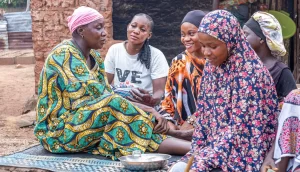
Jonfolo, a caregiver chatting with other women in her family.
PPP works to strengthen the relationship between caregivers and children, and to support children’s early development through gentler, more responsive caregiving. Instead of punishment and fear, the programme teaches parents how to use play, positive talk, and calm discipline to guide their children. It is carried out at the community level, combining parenting education, conversations that encourage behaviour change, and support from other parents going through the same journey.
The programme is implemented by ChildFund, with support from the National Nutrition Agency, through the World Bank-funded RISE Project, and it is now active in many rural communities across the country.
In village after village, the same quiet shift is taking place. Parents who once relied on fear are slowly learning to rely on patience instead. Maimuna, a mother of twins in the Sandu district in the Upper River Region, is one of many women across rural Gambia going through this change.
“I used to whip my children a lot,” she says, “because they were stubborn.”
For a long time, this was simply how she knew to respond when her children misbehaved. It is what she had seen growing up, and what many parents around her still do. She did not see another way.
That changed when she joined the Positive Playful Parenting training in her community.
Through the sessions, she learned to look at her children differently. The behaviour she once called “stubbornness” started to look like something else a child trying to be heard, or simply acting their age. She learned how to sit with her children, talk to them, and respond to them with patience instead of punishment.
“That changed since I did the PPP training, the whip is no longer my first response.”
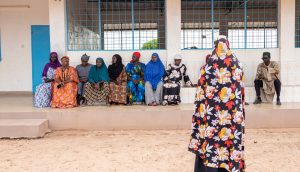
Maimuna in one of her PPP sessions.
Her change did not stop at her own home. Because of what she experienced, she went on to become a PPP facilitator herself. Today, she teaches other parents in her community the same lessons that changed the way she raises her own children. She speaks to them not as an outsider, but as someone who has lived both sides of the story the parent who once struggled, and the parent who found a better way.
Maimuna is just one voice in a much larger change happening across rural Gambia. In community after community, mothers and fathers like her are learning that raising a child does not require fear to be effective. Many of them, like Maimuna, go on to share what they have learned with others, turning their own change into something that spreads through entire villages.
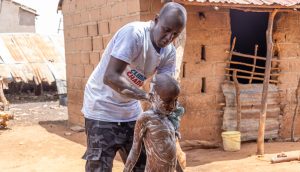
Bubu, one of the project participants, bathing his son.
Her story, and the stories of the many women like her, reflect what Positive Playful Parenting is working to achieve across the country, slowly shifting how entire communities think about raising children with love, patience, understanding, and care.


Related Resources
“Our Children Must Be Safe to Learn” – ChildFund Country Director
As schools reopen across The Gambia, ChildFund The Gambia has called for renewed commitment from...

Local materials become learning toys through positive playful parenting
Limited access to educational play materials can restrict opportunities

Better communication and positive discipline are changing one family’s parenting
Many fathers face social, cultural, or practical barriers that limit their involvement in their children's...