So much depends on the first years of life.

Nutrition and health care, early learning opportunities, safe and loving environments — these are the building blocks that help young children thrive. Yet, for many children in The Gambia, access to these essentials remains out of reach.

Take early learning, for example. Until recently, this was not a priority in The Gambia. But the new education policy (2016 – 2030) lays emphasis on the inclusion of Early Childhood Development (ECD), which comprises children between the ages of 3 to 6 years into the mainstream education. The new education programme seeks to ensure that all children aged 0 to 6 years benefit from formal and informal quality early learning opportunities for enhanced school readiness.

Crucially, at this formative stage of life, children need more than just classrooms. They need nurturing care, access to quality health and nutrition services, protection from harm, and the freedom to play, explore, and learn. That’s why we are committed to an integrated approach that combines health, early learning, and child protection to create safe, supportive environments where every child can reach their full potential.

Our Impact

Facts and  figures from 2024 data.

Our Approach

ChildFund’s ECD approach focuses on helping families, communities, local organizations and governments to create the conditions that the youngest children need for healthy development during their earliest years.  By combining home-based care with center-based interventions and advocating for supportive policies, we create an ecosystem where children can thrive even in challenging circumstances.

A child’s journey begins at home — and parents and caregivers are their first and most important teachers. That’s why our Responsive and Protective Parenting program equips families with the tools they need to nurture their children’s development from the start. 

Delivered through home visits, group sessions, and radio broadcasts, our programs prioritize quality parent-child play activities and promote “positive” or “responsive” parenting practices: ensuring that children have adequate supervision as well as proper nutrition, hygiene and sanitation. We train trusted community facilitators to lead parenting sessions on brain development, child safety, and positive parenting.. These interventions transform homes into safe, stimulating environments where children's earliest developmental needs are met with love and understanding.

In The Gambia, limited awareness among parents and caregivers about the importance of early childhood education has led many to prioritize Arabic schooling during the early years. This misconception that young children do not learn at this stage undermines their readiness for formal education and affects long-term learning outcomes.

The early years of a child’s life are critical for cognitive, social, and emotional development and form the foundation for lifelong learning. Over the past three years, ChildFund has reached more than 20,000 caregivers with sensitization efforts aimed at increasing understanding of the value of early childhood education and promoting greater investment in children’s early development.

~> Read more.

Play is essential to children’s development, offering critical opportunities for learning, creativity, and social interaction. To support safe and inclusive play environments, ChildFund constructed 12 community playgrounds and installed play equipment in 4 schools in 2024. These child-friendly spaces enable children to engage in play-based learning while fostering their physical, emotional, and cognitive development.

Malnutrition is an emerging concern in The Gambia. ChildFund’s Responsive and Protective Parenting (RPP) model integrates nutrition education into a broader childcare and protection framework, currently active in four regions of The Gambia. The program aims to improve caregivers’ Knowledge, Attitudes, and Practices (KAP) on the nurturing care framework, with a strong emphasis on nutrition. Through structured caregiver sessions led by trained facilitators, parents, especially fathers, who are often less involved in early childcare, are equipped with practical skills to support their children’s health and development.

In 2024, 1,620 caregivers enhanced their understanding of key practices, including the preparation of nutritious meals using locally available cereals and foodstuffs. Participants also learned to create stimulating play environments with homemade toys, reinforcing the link between good nutrition, early stimulation, and child well-being.

Featured Project

ChildFund implements the World Bank-funded Playful Parenting Program in Nianija District

In the remote Nianija District of The Gambia’s Central River Region, ChildFund rolled out a Playful Parenting Project designed to empower parents and caregivers to support early childhood development through responsive, play-based caregiving. The initiative reached 579 caregivers and 1,222 children aged 0 to 3 years, helping families strengthen nurturing care practices during the most critical years of a child’s life.

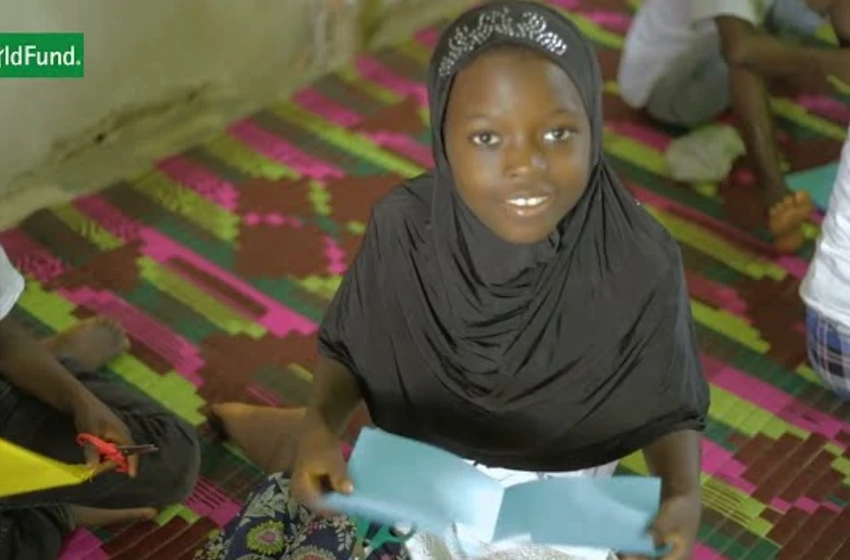
The project focused on building caregivers’ knowledge, attitudes, and behaviors around early stimulation and playful parenting. Using hands-on experiential learning methods, participants were guided to adopt practical strategies that support children’s growth through play and responsive interaction from birth. The results were powerful. At the start of the project, only 44% of caregivers reported any knowledge of child development. By the end of the intervention, that figure had risen to 96%, a clear sign of progress in community awareness and capacity to provide enriching care for young children. Watch this video to learn more about the impact of this initiative.

Sheriffo (2) is held by his mother, Adindow (34), outside their house in the Western Region of The Gambia.Previously their village of about 2400 people had only one water point access, a handpump well installed by another charitable organization. However, that handpump malfunctioned several years ago and could no longer provided water. In 2021, ChildFund stepped in to install an improved solar powered water pump that included 10 distribution points throughout the village so that no one has to walk long distances to access water.

What's New ?

  • All Posts
  • Advocacy
  • Child Protection
  • Child Sponsorship
  • Early Childhood Development
  • Education
  • Emergency Response
  • Environmental Sustainability
  • Food Security
  • Health & Nutrition
  • Localization
  • News & Stories
  • Opinion
  • Press Releases
  • Water, Sanitation & Hygiene
  • Youth Development