


Zero Out of School Children (ZOOSC) Project
In The Gambia, despite efforts to expand access to education, too many children are still missing out. Primary school age in the country is 7–12 years, yet many children either start late, drop out early, or never enroll. According to the 2018 Multiple Indicator Cluster Survey (MICS), only 23.8% of children aged 36–59 months were enrolled in Early Childhood Education (ECE) whic is a critical foundation for later learning.
The effects are evident at the primary and lower secondary levels. Just 72% of primary-aged children and 44% of lower secondary-aged children are in school at the correct age. Many students are over-age for their grade—up to 23% in primary and 53.6% in lower secondary. This results in overcrowded classrooms, higher dropout rates, and grade repetition, fueling the Out-of-School Children (OOSC) crisis.
Nationally, 34% of children of upper secondary school age are out of school. Disparities are stark: In rural areas, 27.1% are out of school compared to nearly half (49.9%) in urban areas. Education levels of mothers also matter—one in four out-of-school children has a mother with only pre-primary or no education. Regionally, the gap is wide: just 6.9% of children in Banjul are out of school, while in Kuntaur the figure climbs to 40.6%.
To address these challenges, UNICEF, in partnership with the Education Above All Foundation, ChildFund, the Ministry of Basic and Secondary Education, and EFANET Gambia, launched the Zero Out of School Children (ZOOSC) Project.
The project targets the most marginalized and vulnerable children, especially those affected by poverty, disability, harmful social norms, or lack of civil documentation. In consultations with families and communities, barriers cited include long distances to school, cultural attitudes towards girls’ education, household responsibilities, lack of transport, disability, and the direct and hidden costs of education.
Our goal is clear: to bring 66,765 out-of-school children aged 7–12 back to school.
This includes 51% girls, 49% boys, and 1.5% children with disabilities—ensuring inclusive and equitable access for all.
The Zero Out of School Children (ZOOSC) Project is driven by the urgent need to realize every child’s right to education. The project aims to tackle the root causes of exclusion and create sustainable pathways for all children to access, participate in, and complete quality education. The key objectives are:
- Enroll 66,765 out-of-school children aged 7–12 years into formal education, ensuring gender balance (51% girls, 49% boys) and inclusion of children with disabilities (1.5%).
- Empower parents and communities to actively support children’s enrolment and retention by building awareness and strengthening their role in education.
- Improve the quality of education by creating safe, inclusive learning environments and enhancing the capacity of teachers and education staff.
- Strengthen national and sub-national education systems, including planning, data management, and coordination, to better respond to the needs of all learners.
- Expand Alternative Learning Programmes (ALPs) to provide flexible learning options for overage and out-of-school children, ensuring no child is left behind.

UNICEF Gambia

Learn more at https://www.unicef.org/gambia/
ChildFund

Learn more at https://www.childfund.org/
Ministry of Basic and Secondary Education

Learn more at https://mobse.gov.gm/
EFANET Gambia

Learn more at https://efanet.gm/about-us/
- Banjul
- Kanifing Municipality
- West Coast Region
- Lower River Region
- Central River Region
- North Bank Region
- Upper River Region
At the start of the 2023 academic year, the Zero Out of School Children (ZOOSC) Project enabled 29,556 children aged 7 to 12 years to enroll in school across The Gambia, bringing them closer to realizing their right to quality education. By prioritizing the most marginalized children, including girls, children with disabilities, and overage learners, the project is helping to close persistent equity gaps in access to learning.
Through strong community engagement, safer and more inclusive learning environments, and improved education planning systems, ZOOSC is not only getting children into classrooms but also supporting them to stay in school and succeed. The impact is already visible, more children learning, more schools responding to diverse needs, and a more resilient education system that leaves no child behind.
Latest News

ChildFund, UNICEF, the Government of The Gambia and the Education Above All Foundation launch a landmark project
This ambitious three-year project aims to enroll 66,765 primary school-age children and...
Read More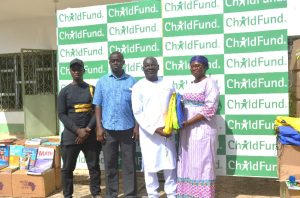
ChildFund donates textbooks and other education kits worth USD 1 Million to the Ministry of Basic and Secondary Education
Access to learning materials is crucial for children's education, as it enhances...
Read MoreZero Out-of-School Children: A National Push to Enroll 66,765 Children in The Gambia
Across The Gambia, more than 66,000 primary school-age children and adolescents are...
Read MoreRelated Resources

Contact Us
For more information, please write to:
SHARE VIA:


