

Chege Ngugi
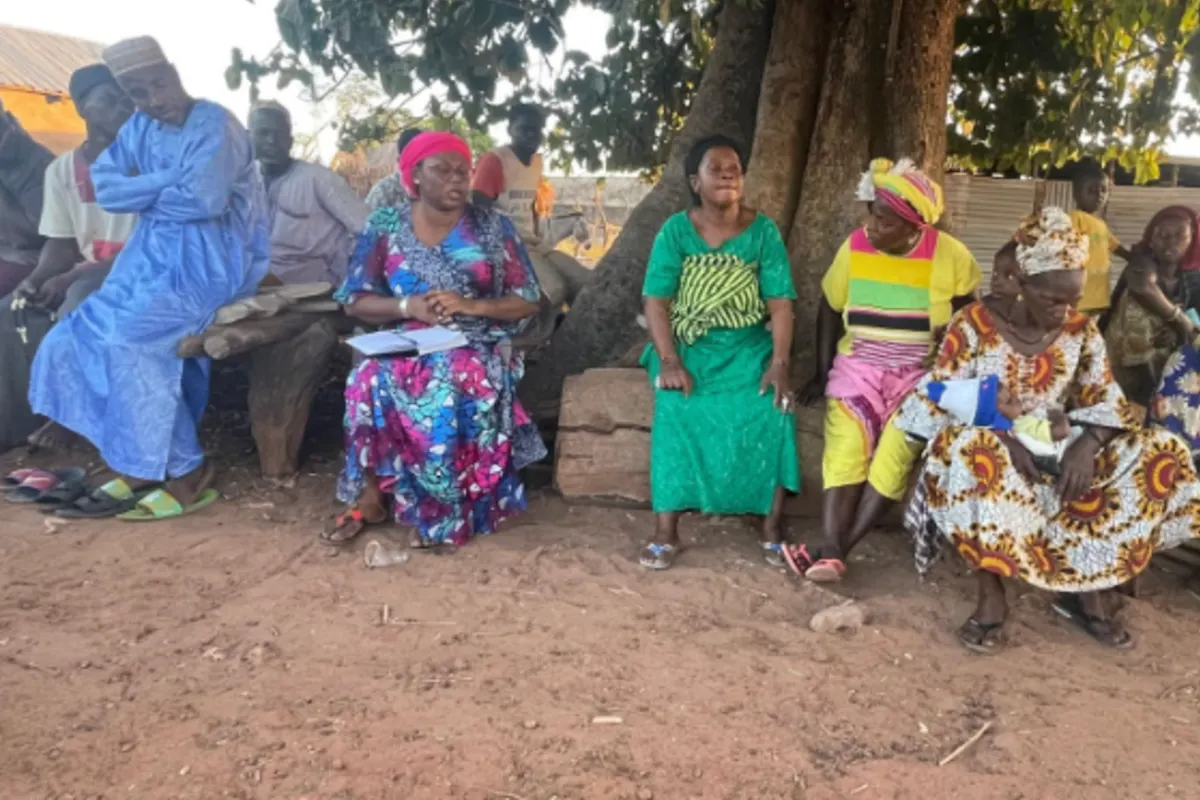
Musu Komma, Country Director of ChildFund The Gambia, speaks with community members in Nianija District about the importance of sending all children to school — including girls and children with disabilities.
Communities key to achieving zero out-of-school children in The Gambia
When it comes to transforming education systems and ensuring that every child goes to school, the people most affected must be at the center of the solution. It may seem obvious: to tackle issues like school dropout, early marriage, or exclusion of children with disabilities, we must secure the support of parents, teachers, community leaders, and even children themselves. Yet too often, well-meaning initiatives overlook this fundamental truth, failing to meaningfully engage those whose lives the projects aim to improve. The result? Missed opportunities, wasted resources, and programs that fall short of their promise.
It’s therefore crucial for governments and development organisations to figure out how to center local communities in their projects at all stages. We must connect with communities, listen and get to understand their problems before we even begin to design projects and/or programs to solve them.
In March, the Government of The Gambia in partnership with Educate a Child (EAC) program of the Education Above All Foundation of Qatar, UNICEF, the Ministry of Basic and Secondary Education (MoBSE), Education For All Network (EFANET), the Office of the First Lady and ChildFund formally launched the Zero Out-of-School Children project, intended to get over 66,700 students back in class. This project is the most innovative and ambitious of its kind in the country and promises to shape the lives of a generation for the better, in addition to being a model for the continent. By taking the lead in the thought and design of this project, the government of The Gambia merits a big shout for stepping out to champion the much-needed reach out for children out of school across Africa.
Its success, however, hinges on the awareness, understanding, and backing of local communities, including educators, children, parents and caregivers, religious leaders, local administrators, and the private sector.
The first step to achieving zero out-of-school children is garnering the support of parents and guardians across the country, by emphasising the value of education, dispelling negative misconceptions surrounding education, and joining hands to address material challenges that keep children out of class. These include issues of affordability of education, school feeding programs, and school supplies.
At the foundational level, community engagement is crucial to driving up early childhood development (ECD). Parents must be made aware of the benefits of ECD, in particular. Currently, less than one in four children in The Gambia aged between 1 and 5 years access early childhood education. This subsequently drives lower attendance rates in primary school and negatively impacts academic performance. With communities on board, this should be backed up by policy – ensuring all children access ECD opportunities.
One of the most important planks of the Zero Out-of-School initiative, in my view, is the support for madrassa (Koranic schools) learning centers through cash transfers, to offer foundational literacy and numeracy skills. Madrassas represent 30% of schools offering lower basic education (LBE) in The Gambia. Statistics indicate that the recognition of madrassas as part of the formal school system has already driven an estimated 10-15% increase in enrolment. Connecting with local religious institutions and leaders, and working together to offer education to thousands of children will be a major milestone and a great example of centering communities in such important projects.
Support from the community is also crucial in ensuring all children including girls, and children with disabilities – who today face a greater risk of missing out on access to quality education – are reached. We must engage communities to drive behavioral change and address misconceptions about the education of girls. Girls can find themselves missing out on an education because their time is spent at home doing chores, or because they could be victims of early marriage. We must also encourage caregivers to ensure children with disabilities go to school, despite any fears of stigmatisation. On the government and other stakeholders’ part, it is also crucial to offer additional educational resources for children with disabilities, as well as their caregivers.
In the push for educational transformation, communities should also be in the driver’s seat when it comes to advocating for better school infrastructure and work conditions for educators.
We must also engage educators and prioritize their views on how to get children back in class. Educators are important and respected members of society and influential factors in a child’s learning outcomes and future overall well-being. Indeed, teachers can be the biggest ‘influencers’ of this campaign. But we must collectively work on improving their work conditions, equipping them to impart knowledge to a generation, and improving school infrastructure and education policy to ensure every single child receives quality education.
Involving communities means going out and engaging people wherever they are. It involves listening to them without judgment and letting them lay out the problems they face, and working together to find solutions. It involves making communities active players in the decision-making process. They must understand that we are on the same side.
SHARE:


